
Plans submitted for former Buxton Museum and court room to become 39 apartments
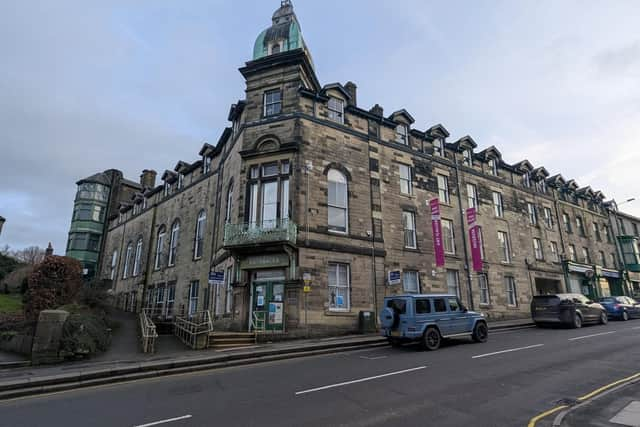
Plans have been submitted to convert the former home of Buxton Museum and Art Gallery, the old court and Hardwick Studios into 39 apartments, air BnBs as well as office space and a community space.
Solanki Holdings purchased the buildings but the application submitted to High Peak Borough Council has been done by Dan Mantell from Vanguard Group Developments.
If approved it will see Peak Buildings on Terrace Road and the former home of the Green Man Gallery be given a new lease of life.
Speaking in a statement submitted with the application Mr Vanguard said: “The proposed uses have been selected to respond positively to the site's town centre location and to support the long-term vitality, viability and regeneration of Buxton.

“The development represents the sustainable re-use of an existing building, introducing complementary uses that are compatible with both the surrounding town centre environment and the character of the building itself.
“The proposed mix will create an active, well-utilised building throughout the day and evening, contributing to increased footfall, natural surveillance and economic activity within the town centre.”
The residential element comprises 39 apartments which will make a ‘significant contribution towards the Borough's housing supply by delivering much-needed smaller homes in one of the most sustainable locations within High Peak’.
The apartments Mr Vanguard says are particularly suited to ‘entry level couples, young professionals, key workers and downsizers wishing to live within walking distance of employment, retail, leisure and public transport facilities’.
The inclusion of office accommodation provides flexible employment space ‘capable of supporting local businesses, professional services and small enterprises’.
Mr Vanguard said: “Retaining employment-generating uses within the town centre accords with the wider objectives of maintaining Buxton as the principal commercial and administrative centre of the Borough.
“The office accommodation will complement the residential use by encouraging daytime activity and supporting the local economy.
“The proposed community space provides an important social function by creating flexible accommodation capable of hosting community meetings, educational activities, exhibitions and other local events.
“This use will help reinforce the role of the building as an accessible destination within the town centre and contribute towards social cohesion and community wellbeing.”
Also in the application are plans for five AirBnBs which the applicant says will ‘support people staying and spending within the town centre’.
The plans say that the mix of uses responds directly to national and local planning policy objectives by delivering new homes, supporting ‘economic growth, providing community infrastructure and securing the long-term regeneration and beneficial use of an existing building and is deemed appropriate for the location and character of the site’.
Mr Vanguard said: “The proposal will make a positive contribution to the vitality and viability of Buxton town centre whilst ensuring that this important building remains in active and productive use for the future.
“The scheme has been carefully designed to respect the character and constraints of the existing building while making efficient and effective use of previously developed land through its sensitive conversion to a high-quality mixed-use development.”
He added: “Having regard to the substantial housing, regeneration, economic, community, heritage and sustainability benefits, it is considered that the adverse impacts of the development would not significantly and demonstrably outweigh its benefits.”
The plans are out for public consultation until November 11.
An objection has already been raised by Father Greg Tobin, the Priest in Charge of St Anne's Catholic Church.
He said: “The church of St Anne’s objects to the proposed development on the basis of the total lack of provision for on-site car parking.
“The development proposes the provision of 39 residential units offering accommodation for at least 39 individuals, a significant number of whom despite ideological aspirations are likely to be car owners needing car parking.
“In addition, the units will generate car parking demand from both visitors and delivery vehicles.
“The Church's location next door makes it particularly vulnerable to overflow parking in our own parking area and also, to the impact of permanent residents blocking town centre parking. Our Mass attenders often number over 100 on Sundays and at religious celebrations and many of these parishioners rely on short term access to town centre parking.
“Whilst the Church welcomes the proposed redevelopment of these high-profile town centre buildings and looks forward to welcoming new neighbours to the locality, sadly it is forced to object to the proposal as outlined in the current Planning Application on the basis that the lack of car parking facilities will detrimentally impact our established service to the town of Buxton.”
Speaking about the development the regeneration officer for High Peak Borough Council said: “It is unclear whether the proposed office space would operate as conventional office accommodation, serviced offices, co-working space, or hot-desk facilities.
“Consequently, the actual employment impact cannot be accurately quantified from the information submitted.
“Assuming occupancy equivalent to 21 full-time jobs, local expenditure associated with employees could generate an estimated £29,274 per annum of additional expenditure within nearby businesses.
“This is based upon current Council assumptions between 4.5 and 9% of employee’s overall household spend is spent within 2-3 miles of their place of employment. In High Peak this would equate to £1,394 per annum regarding employee spending within the local economy. “The proposed office floorspace would also have the potential to generate additional Non-Domestic Rates (NNDR) income where liable and occupied.
“The proposal would also be expected to generate temporary economic benefits during the construction phase through construction employment and expenditure within local supply chains.
“The development would bring an empty commercial property back into use albeit as predominantly private housing and there are likely to be construction jobs and benefits to the local supply chain during the construction period if approved.”