
Buxton’s Golden Age through the eyes of its gilded youth
The First World War ended Buxton’s golden age and the huge economic and social changes it brought about destroyed what was, in effect, the town’s business model of catering exclusively for rich people.
Lovely though Buxton still is, it’s hard to imagine now just how elegant and fashionable it once was. Now a new book explores the town’s Golden Age through the eyes of the world-famous writer who knew it best.
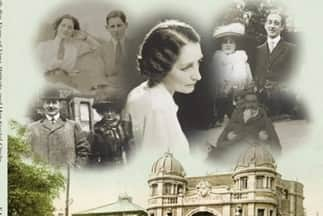

Vera Brittain was part of the Edwardian elite for whom Buxton was an oasis of privilege and cossetted luxury, far away from the mills and factories which created the wealth needed to live or have second homes there.
But as former university professor Kathryn Ecclestone reveals in Buxton’s Golden Age Through the Eyes of Vera Brittain and Her Social Circle, Vera also discovered another world in the town, one which made her acutely aware of her own class privilege and sowed the seeds of her commitment to social justice.
Vera lived in Buxton from the ages of 11 to 21 and is famous for Testament of Youth, the true story of how she lost her brother, fiancé and two close friends in the carnage of the First World War trenches. Her experiences of serving as a nurse on the front lines, translated into dramas for both the big and small screens, resonated with a generation scarred by grief.
Kathryn’s book concentrates on those dying days of Buxton’s golden age leading up to 1914, describing a town designed for the wealthy to escape from their business cares by enjoying the delights of opera at the Opera House, plays at the Hippodrome, lectures by Oxford University professors at Buxton Town Hall and mostly importantly, seeing and been seen by their peers in their finery at the town’s many social events.
The book breaks Buxton’s story down under headings such as, Religion, Home Life, Politics, Sport and Recreation.
It’s packed with photos, and Buxton readers who have already bought it use it to compare their town with what’s left of that golden age now
The book is especially strong on social class and segregation. With no major works or factories apart from small quarries, Buxton’s only real industry was looking after its wealthy inhabitants, which brought the social divide of the day into sharp focus.
Parts of Buxton such as Fairfield, Harpur Hill and Burbage were villages where many of the servants - one in seven of the population - who worked in the big houses lived.
“Other employment came from grocers, chemists, drapers and butchers, extensive medical and spa services, making and serving goods for ‘fancy bazaars, china and glass sellers and driving horse-drawn taxis – Buxton had 14 stables,” Kathryn writes.
Segregation also ruled in the Pavilion Gardens, where seven admissions gates kept out the poor and charity patients at the Devonshire. Servants weren’t allowed in the Gardens unless their employers added them to their season ticket.
But while Vera enjoyed showing off her beautiful clothes at social events and dancing until the early hours of the morning at one of Buxton’s many society balls, she also found political enlightenment in Buxton, first through Oxford University lectures at the Town Hall but also thanks to a remarkable Church of England curate in the working-class village of Fairfield.
The Rev Joseph Ward came from a poor background and left school at 14 but worked hard to gain a degree in theology from Cambridge. As a Christian socialist, his bible study groups were attended by up to 200 working men and his services at St Peter’s were packed with an adoring congregation. His radical views caused huge controversy, filling the Buxton Advertiser letters’ pages with arguments for and against him.
“A pleb preaching to plebs,” was how Vera’s father dismissed Ward’s style, but his daughter was inspired, going against her own class to attend his services and visit the Wards at their Fairfield home.
“Jospeh Ward’s religious teaching and his empathetic understanding of spirited, restless, idealistic Vera inspired her to pursue her ambition of going to university, to think for herself and to lead a meaningful life,” said Kathryn.
The First World War ended Buxton’s golden age and the huge economic and social changes it brought about destroyed what was, in effect, the town’s business model of catering exclusively for rich people.
To find out more, join the author at the book’s launch at 7pm on December 9 in the Pump Room Buxton.
Buxton’s Golden Age Through the Eyes of Vera Brittain and her Social Circle is available from Scriveners’ Book Shop, Brierlow Bar Bookstore, High Street News and the Pump Room.