
Derbyshire Police saw 13 per cent fewer knife crime reports in 2024, figures show
Derbyshire Constabulary recorded 13 per cent fewer knife crime incidents in 2024 than the previous year, new figures show.
In Derbyshire in 2024 there were 659 knife and sharp instrument offences. It means there was a rate of 61 such offences per 100,000 people in the county last year, which is below the national average of 90 per 100,000.
Knife crime offences have increased across England and Wales in recent years, but remain just below levels seen before the Covid-19 pandemic, Office for National Statistics data reveals.
Police forces logged 54,587 knife crime offences in 2024 – up 2 per cent from 53,413 in 2023, but just 1 per cent below the 55,170 recorded pre-pandemic in the year to March 2020.
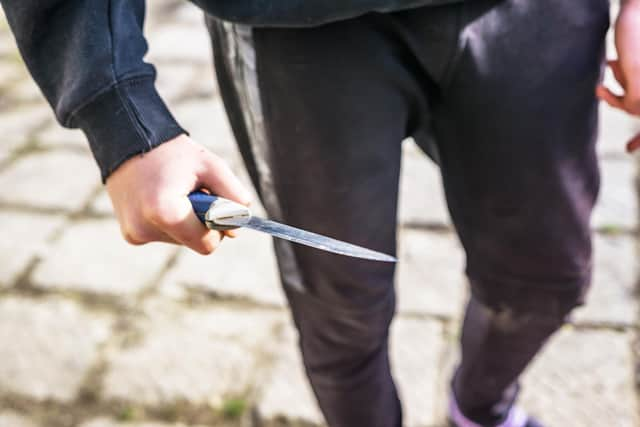

However, possession of an article with a blade or point offences have increased significantly over the same period. There were 28,150 such offences recorded in 2024 – 21 per cent higher than the pre-pandemic figure of 23,264. It was also nearly double the 14,450 recorded in 2016-17.
A knife crime prevention charity welcomed the efforts made so far by the Labour Government to tackle this type of offence across England and Wales, but warned "there is much more to do". The Government has a "mission" to halve knife crime over a decade.
Commenting on the Derbyshire figures, Chief Inspector Mike Sisman, from Derbyshire Constabulary’s partnership and prevention team said tackling knife crime was a “top priority”. He added it was “pleasing” to see work had reduced offences in the county over the last year.
He said: “While we welcome these latest figures we know that our efforts must continue and that this is not the time to become complacent. Our preventative work around knife crime will continue, particularly the work we do in schools to educate and inform children.
“It is clear that involvement in knife crime often forms part of wider criminality, so it is crucial that we put preventative measures in place as early as possible.
"We know that those who carry a knife are more likely to be victims themselves and rather than keeping them safe, carrying a knife actually puts them in greater danger.
“We are committed to maintaining our close relationship with partner agencies who can advise and encourage young people to think about their behaviours and signpost them to organisations who can educate them and offer a diversion from crime.”
Next week Derbyshire Constabulary will join other police forces nationwide in Sceptre – a week of “intensification” around knife crime which will include knife sweeps, school inputs, and community events.
Chi Insp Sisman said: “Not only will officers be working in a visible way but they will continue to work behind the scenes too – gathering intelligence and targeting offenders as well as preventing incidents from happening.
“We are all too aware of the tragic consequences of carrying a knife and the devastating ripple effect that this can have across our communities and will remain steadfast in our work to combat this.”
Patrick Green, chief executive of The Ben Kinsella Trust, said national statistics showed the "considerable challenge" the Government faces in its effort to tackle knife crime.
He welcomed the "decisive steps" taken so far to make knives less easily accessible, especially to youths, but warned there remains "much more to do".
Reacting to the increasing number of possession offences, he said: "We must intensify our efforts to prevent individuals from carrying knives in the first place through prevention and early intervention programmes.
"To this end, the Government must reinvest in youth services, which have endured £1.2 billion in cuts since 2010. Without these vital positive activities and role models, we inadvertently create an environment where knife crime can flourish."
Sir Andy Marsh, chief executive of the College of Policing, said: "Knife crime can destroy lives, fracture communities, and disproportionately blight the lives of the young and disadvantaged."
He said tackling this type of crime should be "one of policing’s top priorities", and added the College of Policing created a practical toolkit aimed at helping officers address local crime efficiently, including knife crime.
"Our toolkit will help officers, supervisors and senior leaders respond to knife crime, so they should be confident in tackling the problems in their community, knowing they are using interventions that work," he said.
A Home Office spokesperson said: "Knife crime has a devastating impact on families and communities across our country. Our mission to halve knife crime over a decade will be delivered through tougher enforcement and stronger prevention."
They said the Government is working on reducing knife crime through various methods, including enforcing Ronan’s Law to stop knives from being sold illegally online, recruiting more police officers, and developing a Young Futures programme to help identify and support vulnerable children before they are drawn into crime.