
Peak District teeth reveal devastating human impact of Britain’s largest medieval lead industry
“Girls and boys alike were raised in dangerously polluted home environments. “
The origins and devastating human impact of Britain’s largest medieval lead industry have been traced - thanks to the teeth of people who lived in the Peak District.
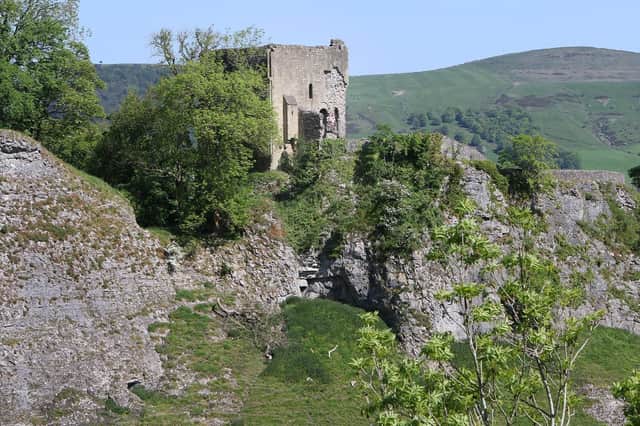

Researchers were able to calculate, by analysing chemical signatures preserved in tooth enamel, that mining and smelting restarted during the mid-7th Century for the first time since the end of the Roman occupation.
It is the first definitive evidence of when post-Roman lead production began in the Derbyshire Peak District, one of Europe’s largest medieval lead-producing regions, after centuries of mining had erased much of the archaeological record.
Roman and medieval lead waste was repeatedly re-smelted during the 16th to 19th Centuries, meaning many of the industrial traces archaeologists would normally rely on had disappeared.
The research team, led by University of Nottingham experts, instead turned to an unexpected archive – the teeth of people who lived in the Peak District.
They explained that tooth enamel forms during childhood and does not remodel throughout life, meaning it preserves a permanent record of the lead absorbed during childhood.
By measuring lead concentrations locked within enamel, the researchers reconstructed childhood exposure to pollution between around the year 650 and 1500.
Study lead author Professor Christopher Loveluck said: "The team is delighted to have finally confirmed definitively the date by which the early medieval lead industry was established in the Peak District, by the mid-7th Century AD, through evidence provided by the people themselves, providing the foundations of western Europe’s largest lead-producing region between the late 12th and 16th Centuries.”
Researchers compared the lead levels of three Peak District cemeteries with populations from across Britain, from the Neolithic period through to the Industrial Revolution.
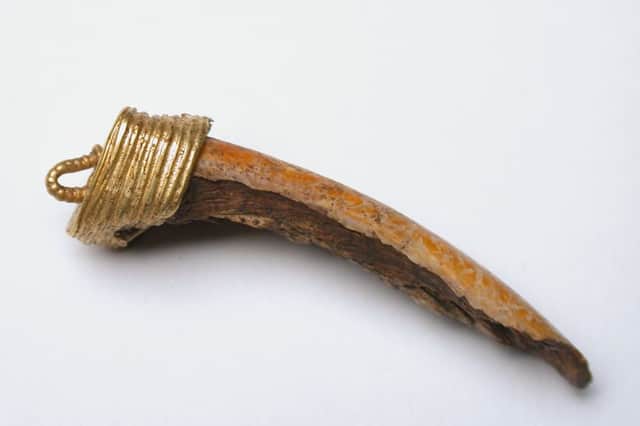
The findings showed that even in the 7th Century lead levels in children living in Derbyshire mining communities were the same, or greater than those from industrialised cities from around 1750 to 1850.
The research, published in the journal Antiquity, is the first to analyse lead contamination in people who mined and smelted lead in western Europe’s largest medieval lead-producing region.
Prof Loveluck, from the University of Nottingham, explained that lead is a toxic metal that can damage the nervous, renal and reproductive systems.
Medieval mining and smelting created several routes of exposure through contaminated dust, fumes and materials.
By examining lead preserved in tooth enamel, the research team were able to investigate how exposure varied between individuals and across communities.
Their findings provide the first solid evidence that post-Roman lead production in the Derbyshire Peak District was established by the middle of the 7th century.
And that by the mid-8th Century, large-scale production had contaminated the wider environment around mining centres such as Castleton.
But the findings also suggest that exposure was not experienced equally across society.
People buried with high-status grave goods, including weapons, generally had much lower lead concentrations than those from less richly furnished burials.
Prof Loveluck said: "This suggests that elites may have controlled or benefited from lead production, while lower-status households were more directly involved in processing ore and smelting, exposing children within those communities to much higher levels of pollution."
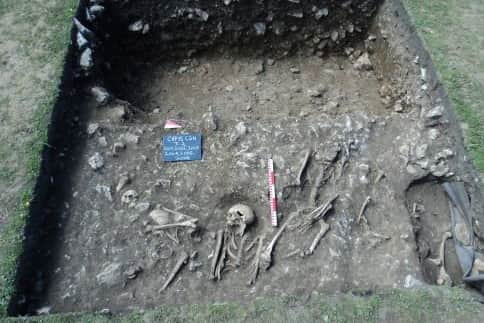
The findings also highlight the potential vulnerability of women in those mining communities.
Three women analysed in the study died between the ages of around 17 and 25 and had elevated childhood lead exposure.
Dr Anna Bloxam, co-director of the Castleton excavations, said: “We know from modern studies that lead can have profoundly harmful effects on the health and development of children: there is no safe level of exposure.
"All the individuals included in our study survived into adulthood, but they were exposed to lead while they were young and growing.
"We can tell from their skeletons that most of the men we studied lived until middle or old age, whereas the women primarily died much earlier, in young adulthood.
“Our results indicate that in these mining communities, girls and boys alike were raised in dangerously polluted home environments.
"This exposure will likely have caused negative health effects in life, and perhaps contributed to higher rates of premature death among women of child-bearing age.”
Lead exposure remained high throughout the medieval period- reaching its greatest levels during the late 12th and early 13th Centuries, according to the findings.
Previous studies of Alpine ice cores and sediment cores from river channels, lakes and peat bogs have identified a particular rise in atmospheric lead pollution attributed especially to British production around 1200.
The results also suggest that mining communities in the Peak District were "remarkably stable."
Isotopic analysis indicates that most people studied had grown up locally, suggesting that mining and smelting knowledge was passed down through generations rather than relying on large numbers of incoming workers.
The research builds on decades of archaeological investigation in the Peak District, including earlier work by University of Sheffield teaching fellow Colin Merrony, which identified and excavated key medieval burial sites in the region.
Human remains from three cemeteries – Wigber Low in the Derbyshire White Peak, dating to the 7th Century, Joule Yard at Castleton, dating from the 7th to 11th Centuries; and Spital Field at Castleton, dating from the 12th to 15th centuries - were analysed for the study.
The combined samples provided a unique record of communities living through the revival and expansion of medieval lead production.
Mr Merrony said: “Our recent excavations in Castleton have provided a lot of new information about the people living in the Hope Valley during the medieval period."
He added: "We now understand more about the size of the population in the valley, and we can see from the archaeological evidence that these working communities were involved in industries which required hard physical labour.
"However, this study has enabled us, for the first time, to see beyond this broader understanding and to look more deeply into the profound impact lead production had on individuals and the communities they lived in.”