
Chief describes Derbyshire carbon-capture pipeline scheme risks as ‘infinitesimally small’
Peak Cluster’s chief executive has offered reassurances about the safety and environmental plans behind a controversial ‘£59.6m’ scheme to build an underground carbon-capture pipeline through Derbyshire.
The organisation, which is made up of cement and lime producers in Derbyshire and Staffordshire, aims to remove carbon dioxide from four cement and lime producers across sites in Buxton and the Hope Valley, in Derbyshire, and near Cauldon, in Staffordshire, with an underground pipeline.
Following opposition from Derbyshire County Council and campaigners, an initial consultation with over 5,500 responses, and the launch of this month’s second consultation, Peak Cluster CEO David Parkin has outlined the scheme’s safety and environmental benefits.
Mr Parkin said: “People are quite rightly asking good questions about the safety. The pipeline will be as safe as all other major pipelines around the country.”


He added: “There has been no major accident on any UK pipeline and we are working within the exact same regulations and standards and we have confirmed it will deliver a safe pipeline.”
Proposed work plants include: Buxton Lime’s Tunstead lime plant, at Tunstead Quarry, off Waterswallows Rd, in Buxton; Breedon’s Hope cement plant, at Pindale Road, in the Hope Valley; Tarmac’s Tunstead cement plant, at Waterswallows Road, Tunstead House, in Buxton; and Holcim’s Cauldon plant between Cauldon and Waterhouses villages in Staffordshire.
The scheme aims to take CO2 from the connecting cement and lime plants and quarries to a proposed Morecambe Net Zero carbon storage site beneath the Irish Sea beyond The Wirral after passing through Derbyshire, Staffordshire, Cheshire, and Merseyside to secure the industry and reduce carbon emissions.
Mr Parkin explained that the provisional corridor width of land involved in plans was 300metres but this was always going to be reduced to 100metres and only 30 to 40ft will actually be used to construct a pipeline with a diameter of no more than one metre.
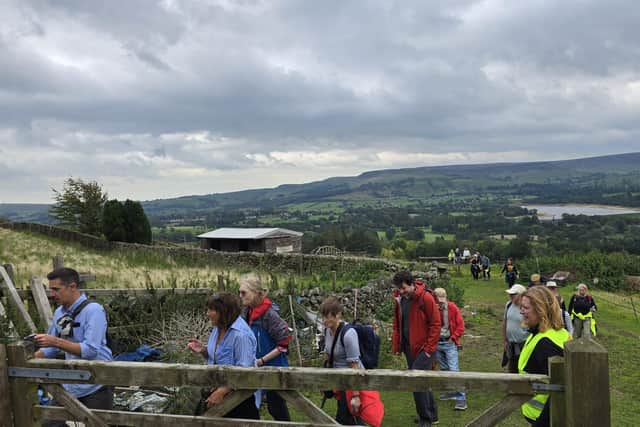
The UK currently has about 20,000km of similar underground and unnoticeable steel pipelines for gas, fuels and chemicals which, according to Mr Parkin, have been operating for decades with a huge reliability and safety without causing any environmental damage.
As a major nationally significant infrastructure project, Mr Parkin says the scheme will use tested pipeline technology across countryside by removing and replacing technology with temporary constructions sites and access routes to transport steel and pipelines, although there will be permanent new Above Ground Installations and Block Valve Stations.
Mr Parkin insists the environmental and economic gains outweigh the disruption, any feared safety risks and feared harm to the countryside.
He stated the project offers very good value for money for the Government which is looking at helping to fund the scheme but there is also a need to recognise that even though there will be a big cost there is a bigger cost for Climate Change if such projects are not pursued.
Mr Parkin said: “Our aim and intention is to restore all the land back to original purposes apart from areas with Above Ground Installations.”
He added: “We are legally obliged to be a biodiversity net gain project so we have to leave the environment better than we found it and there is a legal process about how we do this.
“That creates a baseline leaving the environment ten per cent better than we found it.”
Mr Parkin also explained the disposal of CO2 beneath the Irish Sea will be into rock with depleted gas reserves which has safely held gas for millions of years.
Peak Cluster Ltd stated the project aims to secure the future of Britain’s cement and lime industries while safeguarding and creating jobs and ensuring a reliable, ‘homemade’ supply of essential materials while greatly reducing harmful carbon emissions.
However, Derbyshire County Council is opposed to the plans, which will run through the Peak District, due to safety concerns, while it is continuing to support quarries and the cement industry to secure Government funding to reduce emissions at source.
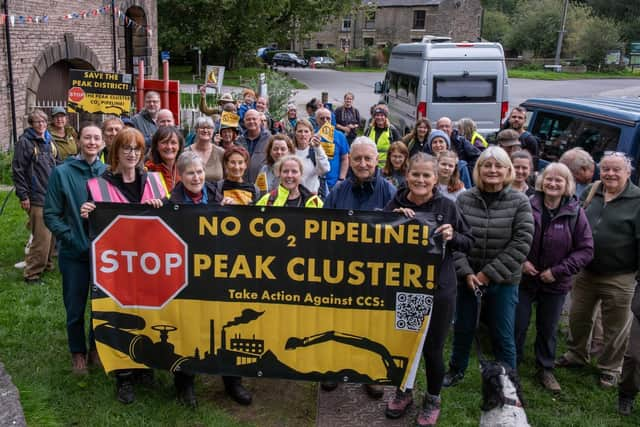
The Action Against Carbon Capture Storage campaign group has concerns about disruption and the feared impact on farmland, biodiversity, countryside and The Wirral coastline.
Derbyshire CountyCllr Ruth George argued that carbon dioxide is anasphyxiant – or a gas that can cause death – and the proposed Peak Cluster pipeline aims to run across hills, valleys and land that she claims is unstable.
She highlighted a CO2 pipeline rupture in Mississippi in 2020 which she says was caused by soil movement after heavy rain which resulted in people collapsing and needing hospital treatment.
Cllr George argued the proposed pipeline route targets greenfield sites and it will have a significant impact on nature, breaking up wildlife corridors, uprooting trees and hedges along the route and disrupting protected species.
But MrParkin said similar land has already been used safely for pipelines and he stressed CO2 will be put through the Peak Cluster pipelines at a much lower pressure than in Mississippi with a safer regulatory system and emergency plans.
He stressed strict checks and precautionary plans will be in place in the unlikely event of an emergency and he described any such risks ‘infinitesimally small’.
Peak Cluster aims to submit a Development Consent Order application in 2027 for Government approval.
The Government has agreed to award £28.6m towards the estimated £59.6m project to support clean energy and jobs with the remaining funding to come from private firms, according to the Planning Inspectorate.
The latest consultation runs from November 12 until December 18 inviting comments on affected areas and proposed Above Ground Installations, Block Valve Stations, and temporary areas required for access and construction.
Those interested in the consultation and registering to attend events orwebinars can visit www.peakcluster-consultation.co.uk.
A further consultation on more detailed aspects will follow in summer 2027 with more detail on the design, construction and operation.