
‘Peak Cluster didn’t listen to our concerns’ says Whaley Bridge county councillor
Following a meeting with High Peak residents about the 120 mile C02 pipeline which will pass through Whaley Bridge and Chapel-en-le-Frith a county councillor is putting forward a motion to formally oppose the plans.
Independent Councillor Ruth George organised a meeting for residents on Monday March, 16.
Peak Cluster was invited and spoke to residents but Councillor George says they did not really hear what was said at the meeting.
She said: “There were 250 people at the meeting, it was standing room only at the Bowling Club and we had to turn people.
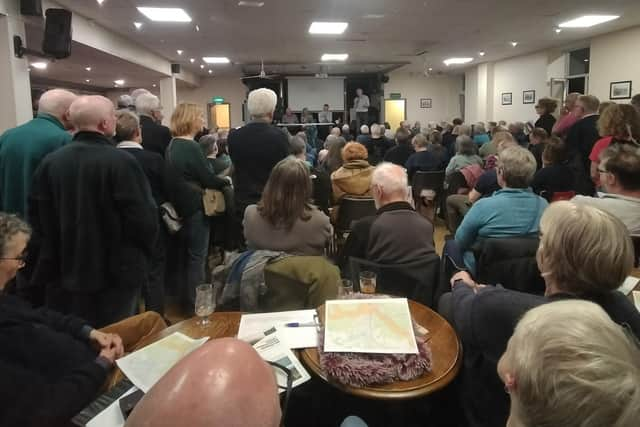

“People are worried and rightly so but Peak Cluster did not listen to our concerns about the safety of installing this pipe through residential areas.”
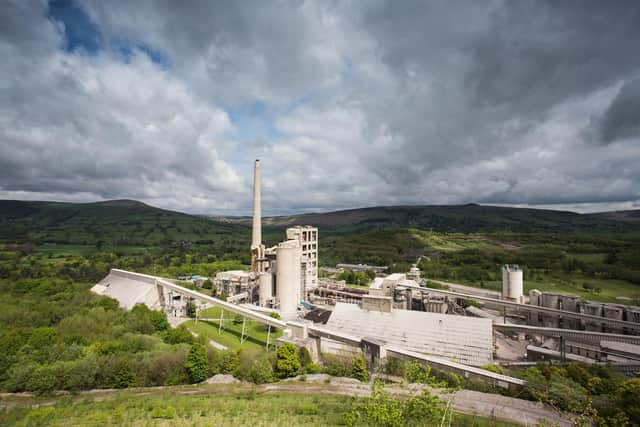
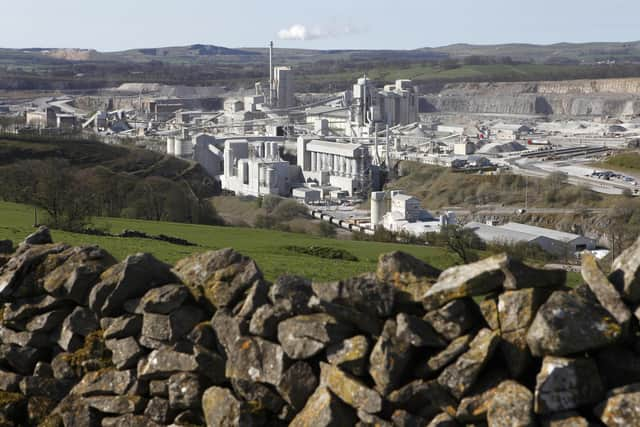
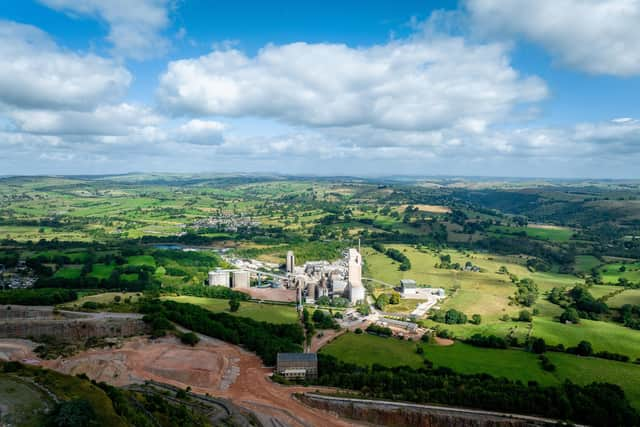
If given the green light the proposed Peak Cluster project will capture harmful carbon dioxide from three cement and lime plants; Tarmac cement and lime plant at Tunstead, Breedon's Hope cement plant and SigmaRoc's Hindlow lime plant and transfer it by pipeline to a storage facility under the Irish Sea at a cost of many millions and millions of pounds. The route of the proposed pipeline includes a huge Above Ground Installation of up to 100m x 100m on the hills between Dove Holes and Chapel.
The pipeline will then travel under the Buxton rail line and behind Chapel High School, cross Manchester Road near the Hanging Gate Pub, go behind Chapel Golf Club and up the hill above Tunstead Milton.
It would then cross Eccles Road near to the junction with Milton Lane, cross Sunart Fields going down to Silk Hill/Bings Road, travel under the Goyt River and Peak Forest Canal.
Councillor George said: “People are worried about the pipeline being above their homes.
“People are worried about landslides and leaks as carbon dioxide settles at the bottom of valleys where our communities are and can be deadly.
“People are concerned about the route Peak Cluster has chosen to take.
“Why are they choosing to pass through towns with homes, villages and schools when they could divert the route and go through the Peak District National Park but are they worried they won’t get it approved so are taking the easy way out.”
She says a project that will cost millions and probably billions of pounds should have stringent safety measures in place.
She also says that if Peak Cluster has that much money available to them for this 121 mile pipe the money might be better invested in looking at how decarbonising can take place at site and improving the equipment there rather than running a ‘potentially life threatening pipe’ across the country.
Councillor George said: “The government will be making the final decision but we the people who live here will have to live with the result.
“We need accurate information and to trust in Peak Cluster which people don’t.
“This is my community and I care so I will stand up when something isn’t right.
“I will be asking Derbyshire County Councillors to formally oppose these plans just like the councillors in the Wirral have done.”
The motion will ask councillors to ‘oppose the proposed CO2 pipeline on the grounds of safety, danger to our infrastructure and impact on our environment’.
She said: “The meeting was an opportunity for Peak Cluster to show they were listening to the reasonable concerns of the people of Whaley Bridge, Chapel, Buxworth and Furness Vale whose homes, schools and communities sit below the proposed pipeline.
“Sadly they did not engage with the evidence of landslips in this area, ruptures of CO2 pipelines in other areas and the impact on communities in the path of a stream of released carbon dioxide.”
We put the concerns of residents and Councillor George to Peak Cluster.
David Parkin, chair of Peak Cluster, said: “The cement and lime industry has been a part of the region’s rich industrial heritage for more than a century.
“However, as we move into the future low-carbon economy, industry needs to adopt new, sustainable ways of operation and production.
“Peak Cluster would enable this transition to protect around 2,000 existing jobs connected to the cement and lime plants in Derbyshire and Staffordshire and stimulate investment.”
The idea of using pipes to transport gas and liquids is not a new one Mr Parkin said and has been in use for more than 100 years in the UK.
“There are currently around 27,000km of high-pressure pipelines carrying natural gas and a range of other fluids, including aviation fuel, ethylene and other chemical products.
“The practice is very well-established and robustly regulated, and the UK has a global reputation for safety in this field.”
When asked about the route of the pipe Mr Parkin said: “The development of a pipeline route is a long and technically detailed process.
“We are still at an early stage and considering all options to determine the best route for the pipeline.
“So far, we have identified a wide search area, which includes land where the pipeline could potentially be laid.
“The search area takes into account built-up areas, geology, existing infrastructure, and areas of environmental importance. We are using the feedback from local communities and other stakeholders gathered during our initial consultation to continue to develop a further iteration of the project design with greater detail on our proposed pipeline route.” He added: “Over the course of the next three years, this process will shape a route for the pipeline that is safe, has minimal environmental impact and is constructible.”