
New report reveals how Derbyshire families with special educational needs children have been failed - and more than a quarter of a million pounds in compensation paid out
A new report details a litany of council errors that have led to more than a quarter of a million pounds in compensation being paid to Derbyshire families who have children with special educational needs.
The report from the Local Government and Social Care Ombudsman, largely details the complaints received and upheld by the council watchdog in response to issues raised over Derbyshire County Council’s handling of support for children with special educational needs.
It shows that over the last year (March 2023 to March 2024), a total of 55 complaints were investigated by the watchdog and 47 were upheld – 85 per cent.
This led to a total of more than £230,000 being paid out in compensation to failed families, up from £36,000 in the previous year.
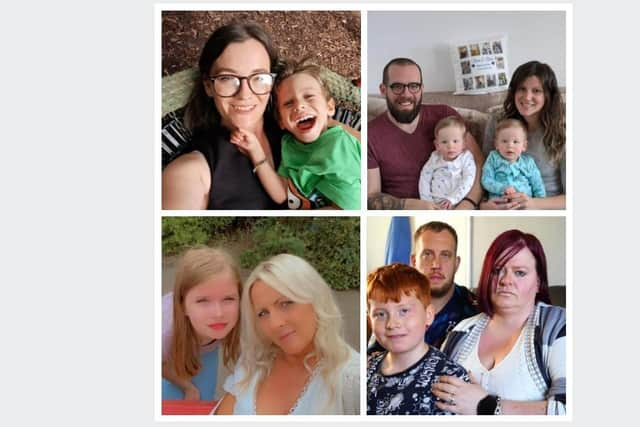

The vast majority of these payments relate to the handling of education, health and care plans (EHC Plans), legal documents between the council, school, family and child outlining care provided to children with special educational needs.
As it stands, the council has more than 6,000 EHC Plans on its books, which has doubled in the past few years, and it had said that as of August it had already received 7,100 requests for these documents.
Meanwhile, just six per cent of investigations (three cases) found the council provided a satisfactory remedy to the issues raised by families before the watchdog’s intervention.
Furthermore, 40 per cent of the council’s responses to the watchdog were late, with the authority citing staff shortages and a “substantial” increase in complaints as the reasons for delays.
On one occasion the watchdog said it had to “remind the council of our power to issue a witness summons before we received the information we had requested”.
A council report claims the authority had not received the request for further information and that it later apologised to the watchdog.
The authority says 30 per cent of its children’s services staff are temporary employees with recruitment ongoing to fill gaps permanently.
Most of the complaints raised with the council and then the watchdog – due to insufficient remedies by the council – relate to delays in handling EHC Plans meaning children either go to school without sufficient support or remain out of school for months, entire terms and years.
Many EHC Plans and reviews are still not carried out in time, but the council says the issue has improved.
It has consistently said that the majority of complaints it was fielding related to a known period of insufficient service which “was not good enough” between 2022 and 2023.
All of this comes as the authority awaits the outcome of an Ofsted inspection into its special educational needs provision, carried out in September, which is due “later this autumn”.
The watchdog says it is “disappointed” in the council’s performance, writing: “In last year’s letter, concerns were raised about your council’s late responses to our investigation enquiries and it is disappointing to report we have had similar concerns this year with more than 40 per cent of responses delayed.
“I, again, ask that you take action to improve response times to our enquiries. It is important we are provided with the information we have asked for promptly, and that, where you encounter delays, you keep us informed.
“I am aware of the difficult financial circumstances and service demands that make continuous improvement a challenging focus for the sector.
“Despite the challenges, I have great confidence that you recognise the valuable contribution and insight complaints, and their swift resolution, offer to improve services for the public.”
Cllr Alex Dale, the council’s cabinet member for education, said: “SEND remains one of our most sensitive, important and complex areas of work which requires working closely with families, schools and other agencies on detailed assessments for each individual child who needs specific specialist support.
“While this can’t be rushed, we’ve acknowledged we must do significantly better and are making progress with our determined efforts to reduce delays which we understand have a significant impact on children and their families.
“As the service settles into the new way of working and we start to use our new case management technology, communication with parents and schools will start to improve.
“There’s still a lot to do and as with the introduction of any new technology system and completely new way of working, these things take time to settle in and embed before we’ll see the kind of major improvement we’re confident will be the result. But while that’s happening we’ll continue to work hard, listen to parents and monitor our progress.
“While there’s nothing new in the ombudsman’s annual review letter, it does provide another perspective to support the improvement journey we started last year..
“Although the ombudsman rightly holds local councils to account, there is an acknowledgement in this year’s letter of the difficult financial circumstances and service demands that make improvement a challenge for us.
“That said, we’re confident we’re on the right track to progress and as our new service settles in, the levels of dissatisfaction leading to complaints and appeals to the ombudsman will hopefully reduce.
“While there’s plenty of hard work still ahead, we’re already making progress on several fronts and as with the ombudsman’s letter, we’ll use the outcome of our Local Area SEND inspection to further develop and strengthen our services across the partnership and will continue driving forward with improvements.
“We want to give every Derbyshire child, whatever their challenge or ability, the best possible start in life. This is our commitment and this work continues.”