
New board shows visitors life in Buxton 10,000 years ago
A new interpretive panel has been unveiled at Lismore Fields by Buxton Civic Association at the site of a Scheduled Monument and tells visitors all about life 10,000 years ago.
Lismore Fields in Buxton, is recognised as a Scheduled Monument of exceptional archaeological importance, with evidence of human activity dating back to the Mesolithic period, also known as the Middle Stone Age, about 8000 BCE.
The new interpretive panel has been created by Buxton Civic Association (BCA) to enhance public appreciation of this remarkable site, presenting key findings in an accessible and engaging way.
Dr. Rachael Cooksey, BCA Transition Project Manager and project leader, said: “Lismore Fields is an extraordinary site that tells a story spanning thousands of years of human activity.
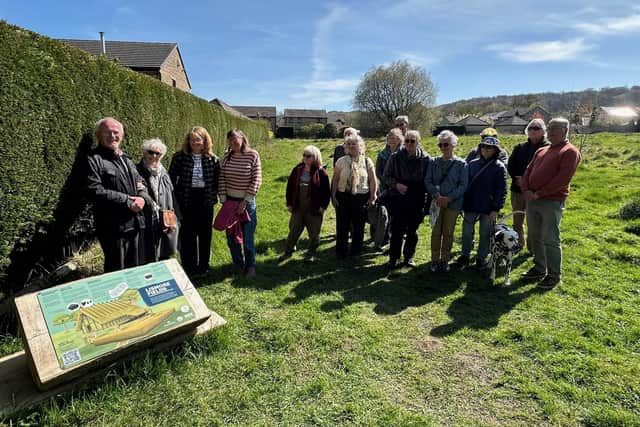

“This panel allows us to share that story more widely, helping people to better understand and appreciate the lives of the early communities who once lived and farmed here.”
The new panel offers insight into how early communities lived, farmed, and developed over thousands of years, helping to connect present-day visitors with Buxton’s ancient past.
Discoveries at the site include early settlement remains of a Neolithic longhouse, artefacts, and some of the earliest evidence of cereal cultivation in Britain.
These have contributed significantly to people’s understanding of prehistoric life.
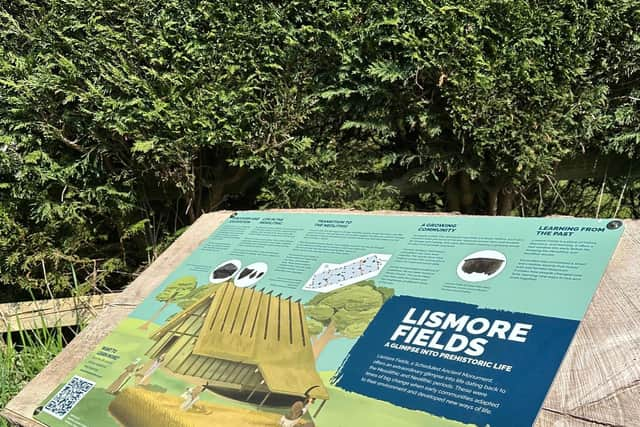
Situated just a short walk from the town, the panel provides an opportunity for both residents and visitors to engage with an important piece of local heritage in its original setting.
The land is owned by the Chatsworth Estate, who kindly gave permission for the panel to be developed by BCA, thanks to funding from the National Lottery Heritage Fund and other public donations.
This installation marks an important step in making the story of Lismore Fields more widely accessible, ensuring its significance can be appreciated by generations to come and was officially opened by the BCA team on Wednesday April, 22.
Dr Cooksey added: “It’s been a privilege to work alongside volunteers on a project that brings this important heritage to life in such an accessible way.
“We are extremely grateful to the funders and supporters whose generosity has made this possible.”