
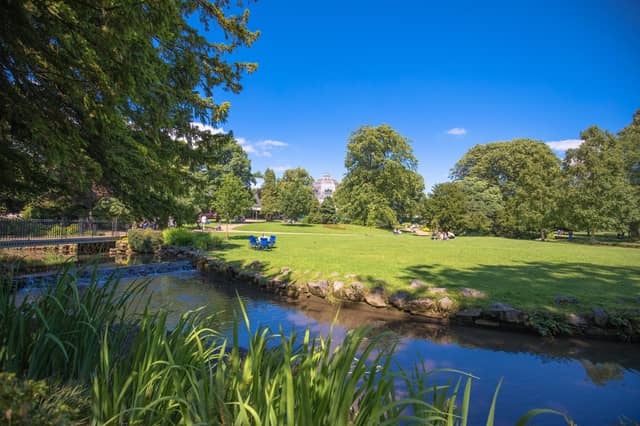

Taking the waters was very fashionable in the Georgian era and the 5th Duke of Devonshire significantly promoted the spa town of Buxton to rival Bath.
He commissioned architect John Carr and developed the town's architecture, including the Crescent, to attract high society for its perceived curative properties. The Duke's vision was to transform Buxton into a social center with shops, restaurants and provide a place for society to gather and engage in the season's etiquette while taking the waters.
While neither Bath nor Buxton is inherently "better" we would of course choose Buxton for a more affordable spa town experience nestled in the Peak District, offering independent shops and a relaxed atmosphere.
Let’s look at how it compares with the significantly more popular tourist destination of Bath...
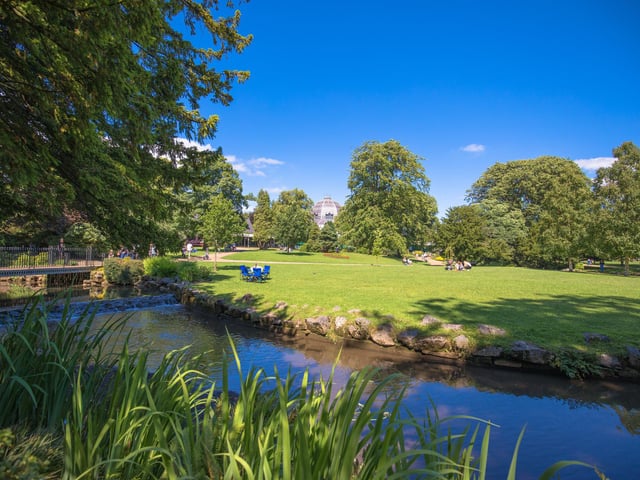
1. Beautiful Buxton
While neither Bath nor Buxton is inherently "better" we would of course choose Buxton for a more affordable spa town experience nestled in the Peak District, offering independent shops and a relaxed atmosphere. Pictured are views of The Pavilion Gardens. Let’s look at how it compares with the significantly more popular tourist destination of Bath... Photo: Ian Kennedy
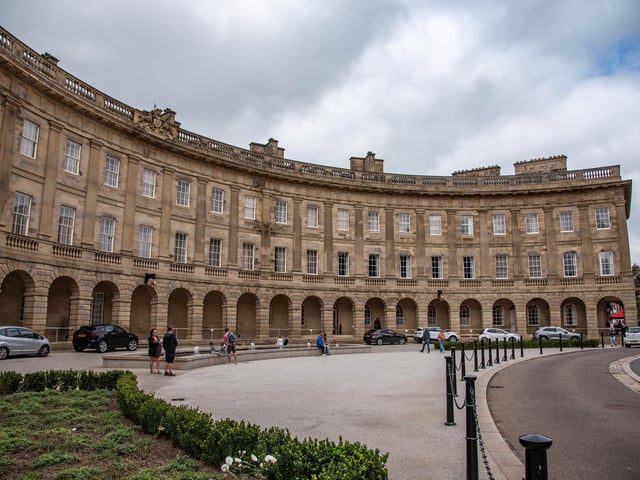
2. Architecture
Buxton's architecture is dominated by the grand Victorian and Georgian buildings built during its rise as a fashionable spa town, including the Grade I-listed Georgian Crescent, the Devonshire Dome, and the Opera House. Other notable structures include the Pavilion Gardens' glass and iron building and the Old Hall Hotel, which dates back to the 16th century. Both Buxton and Bath have Crescents. The Crescent in Bath was built between 1767 and 1774 . The Crescent in Buxton, built between 1780 and 1789 by John Carr, is much smaller. Both are architecturally impressive, although the Royal Institution of British Architects praised Buxton, describing it as "more richly decorated and altogether more complex" than the Royal Crescent in Bath, its inspiration. Buxton Crescent also features a proper and architecturally elaborate "back," making it a complete and integrated design. This stands in contrast to Bath, where the back is less decorative. Photo: Pavel Babic - stock.adobe.com
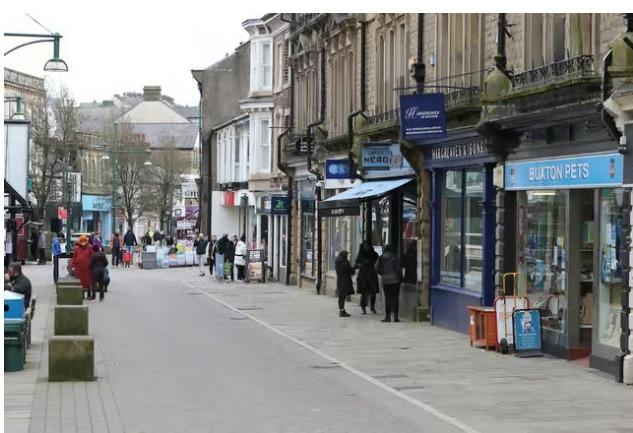
3. Tourists
Bath has a population just shy of 100,000 - but has been revealed as the most overcrowded UK city with tourists. It attracts a significantly higher number of visitors with six million annually. Buxton, though a significant and growing tourist destination, attracts over a million visitors annually. Photo: Photo Jason Chadwick
4. Independent shops
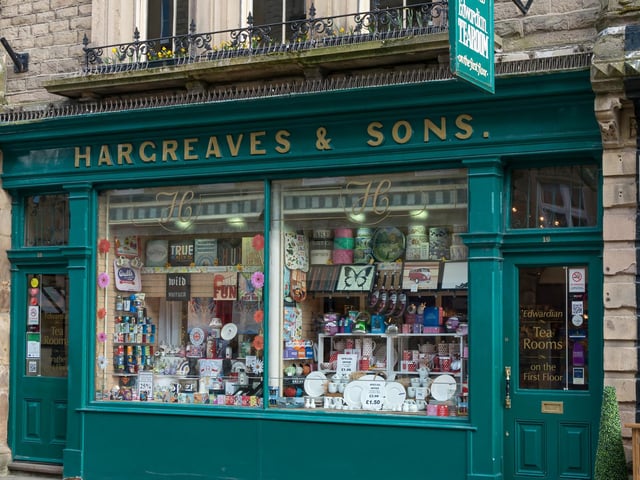
Shopping in Buxton offers a variety of independent businesses as well as high street brands. Buxton offers more independent shops, with options in the Cavendish Arcade and along the High Street, while Bath, though known for luxury shopping, is generally dominated by larger retailers. For a more unique and curated independent shopping experience, we think Buxton is the better choice. Pictured is Hargreaves & Son, in Spring Gardens, one of the oldest businesses in Buxton which has been trading since 1865. Photo: Chris Lawrence - stock.adobe.com