
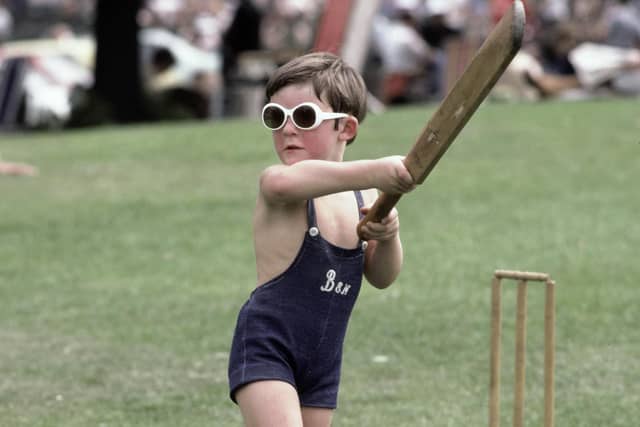

Images include Deborah Cavendish feeding the chickens at Chatsworth House and Alice Boardman – the only passenger using Great Longstone railway station in 1962.
Not for the squeamish are photos of British circus performer Eddie Sinclair performing his act of endurance which included a masked woman hammering a six-inch nail into his tongue!
And did you know why one of the biggest rock bands in the world visited Derbyshire in the summer of 1968?
Take a look at our gallery.
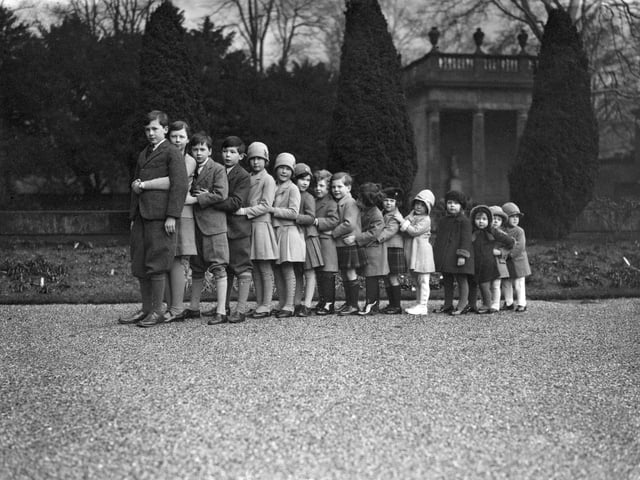
21. Cavendish family
Cavendish family group of 16 grandchildren in the gardens of Chatsworth, Christmas 1929. The grandchildren of Victor Cavendish, 9th Duke of Devonshire. (Photo by NEMPR Picture the Past/Heritage Images/Getty Images) Photo: Heritage Images
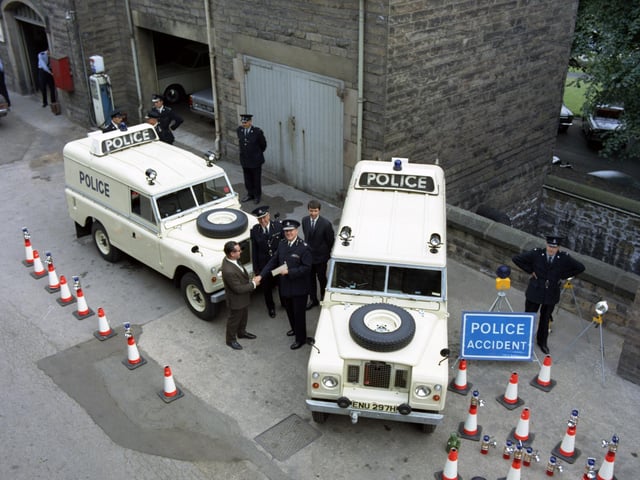
22. New Land Rovers
The Police Commissioner for Derbyshire taking delivery of two new Land Rovers, Matlock 1969. (Photo by Paul Walters Worldwide Photography Ltd./Heritage Images/Getty Images) Photo: Heritage Images
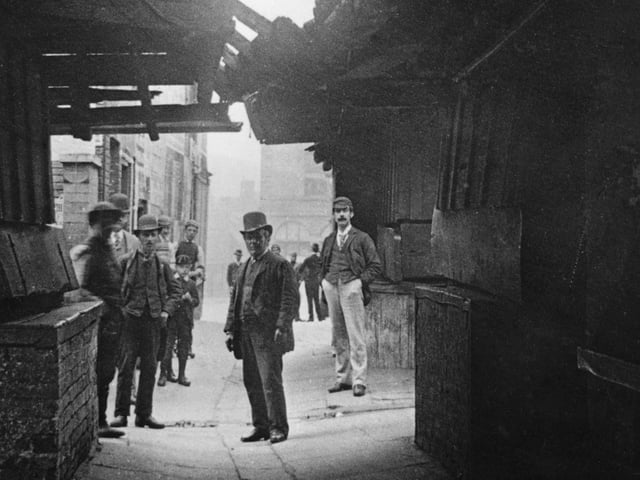
23. The Shambles
The Shambles, Chesterfield, c1887. View showing the original wooden board 'fleshamols' (shelf flaps/window openings) of the butcher's shops. This street was named Shambles after the fleshamols on which butchers laid out their meat for sale in this area, in the 1400s. Streets called Shambles can be found in many other parts of the country, the most notable being in York, and are always associated with butcher's shops (some of the shops in York have retained their fleshamol boards). This picture is looking towards the Market Place. This gloomy, atmospheric picture illustrates how dark and cramped towns were during the Medieval period. Also of note in this picture is the channel down the middle of the lane, which would have served to take away blood and waste water from the butcher's shops. (Photo by NEMPR Picture the Past/Heritage Images/Getty Images) Photo: Heritage Images
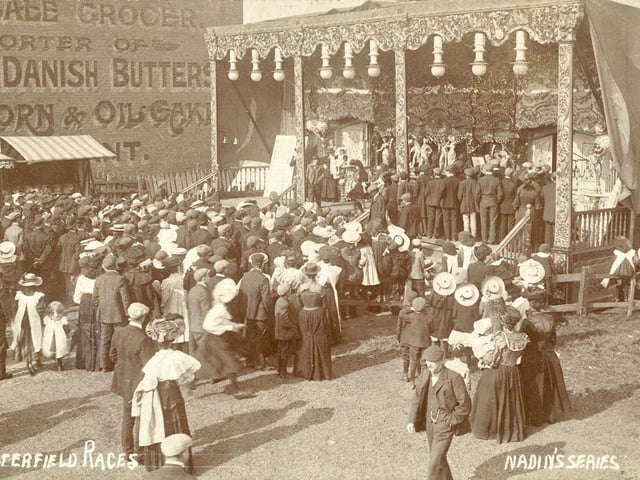
24. Proctor's Bioscope
Proctor's Bioscope, sideshow at Chesterfield Races, Derbyshire, c1900. The travelling Bioscope showmen who visited fairs and events in the period 1890-1914 were the pioneers of the cinematographic world. These people played a very important role in the history of mass entertainment and no one should ever underestimate the part they played in bringing this medium of entertainment to the people. The bioscope shows began towards the very end of the reign of Queen Victoria and drew to a close at the time of the First World War. The showmen would buy their films at the beginning of each season for at that time film renting was unknown. These early films were made at Walton-on-Thames by such people as Cecil Hepworth. Other well known makers were Walter Barker and George Jackson, who was well known for his comedy and short drama films. The Yorkshire firm, Frank Mottishaw's Sheffield Photo Co made what was probably the first film of Dickens's Novels Oliver Twist and Scrooge in 1904. The first 'Westerns' were made in England. Other popular films showed news events of the day such as Boer War pictures or Colliery disasters. Some showmen introduced sound effects to create a more realistic atmosphere and employed an effects worker who would work behind the screen. Between 1906-1908 some showmen introduced sound films, with equipment made by Gaumont Chronophone. The travelling cinemas began to go out of fashion with the erection of hundreds of permanent picture houses up and down the country. (Photo by NEMPR Picture the Past/Heritage Images/Getty Images) Photo: Heritage Images