
Derbyshire farmers plough on in campaign against Family Farm Tax
Unrest is building as farmers say the government continues to ignore their pleas.
The introduction of Inheritance Tax (IHT) on family farms was dubbed a vindictive move by politicians who met with dozens of local farmers on Saturday night, 22nd February.
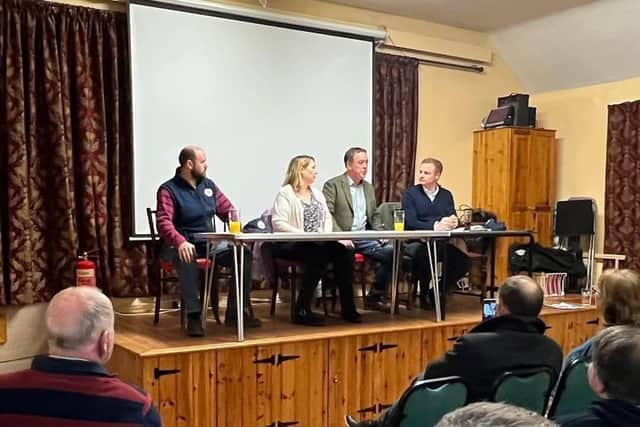

Co-ordinated by the campaign group ‘Farmers To Action’ as part an industry wide battle to halt IHT on agricultural properties, farmers were invited to put questions to a panel of speakers including Robbie Moore MP (Shadow Defra Minister), Karen Bradley MP (Staffordshire Moorlands) and Farmers To Action campaigner Alan Hughes at Warslow Village Hall.
Farmers were advised by the Conservative politicians to use every opportunity and platform at their disposal to raise awareness of the consequences the IHT policy will have.
Karen Bradley said: “This is about what we can do collectively to get them to change their minds. There are members of parliament who are backing these changes who need to know they won’t be MPs at the next election if they don’t support their electorate.”
Farmers To Action (FTA) campaigner Alan Hughes, a fourth generation farmer from Shropshire said: “The IHT changes will devastate family farms and make it impossible to hand them down.”
Local FTA Co-ordinator Ken Fallows who chaired the debate added: “Our entire way of life is under threat, IHT is unfair for all businesses but especially farmers. We can’t pass these costs down to our customers as our prices are dictated to us.”
Robbie Moore acknowledged Labour’s refusal to admit the magnitude of the proposed changes. He said: “The wider economic impact of this will be huge and the government are nowhere near understanding these implications. Through every mechanism possible this message has to be brought home to them.”
It is being widely reported by agricultural merchants, machinery dealers and others across the sector that the impact of the proposed IHT is already being felt, with a significant decline in new orders being placed.
The Shadow Defra Minister also warned that the policy was not likely to cause a reduction in land value as some were anticipating.
“There is so much capital sitting out there ready to buy land up for carbon offsetting and other projects, I think yes IHT will increase the availability of land because farmers will be forced to sell but it will not reduce its value. This is a vindictive approach that is ideologically driven to free up land for government agendas and that’s why they are unwilling to make any changes,” he said.
Ken Fallows alluded to the implications the policy was having on mental health within the industry: “We’ve got elderly and ill farmers who are now hoping to die before the new ruling comes in next April or to try and survive to the next parliament in four years time. This is awful.
How can we get a pause on this policy for those who don’t have time to prepare?”
Robbie Moore agreed: “It is catastrophic but the government are not listening.”
One farmer, attending the meeting, commented: “It’s time for everyone to stand up and say we have had enough. Things have to change while we have still got people in this country who are willing to do the work it takes to produce food for the public. I don’t think the government realises the unrest that is brewing.”
As the meeting drew to a close Karen Bradley encouraged farmers: “You must do everything you can to raise awareness and we will do everything we can, but do not give up hope.”
Robbie Moore agreed: “Widen the conversation – put as much pressure as possible on MPs and talk to other businesses who will also be impacted. We need to make sure the Treasury and the
Prime Minister realise the collective impact of this budget.”
The government's new rules for Agricultural Property Relief (APR) limit the 100% inheritance tax exemption to the first £1 million of agricultural and business property. The government say the change aims to make the inheritance tax system fairer for wealthier estates and protect small family farms.
The latest figures show that the top 7% (the largest 117 claims) account for 40% of the total value of agricultural property relief. This costs the taxpayer £219 million. The top 2% of claims (37 claims) account for 22% of agricultural property relief, costing £119 million. Reforms are expected to affect the wealthiest 500 estates each year with smaller farms not affected by the changes.
A Treasury spokesman said: “It is not fair for a very small number of claimants each year to claim such a significant amount of relief, when this money could better be used to fund our public services.”