
Derbyshire councillor claims Peak Cluster’s carbon capture scheme changes fail to address safety fears
A Derbyshire County Councillor who persuaded the local authority to oppose plans for the controversial Peak Cluster carbon capture pipeline scheme has argued that proposed changes to the project still do not address safety fears.
Peak Cluster, which is made up of cement and lime producers in Derbyshire and Staffordshire, is overseeing the £59.6m project to build an estimated 121 mile underground pipeline that will capture carbon dioxide from four cement and lime producers across sites in Buxton and the Hope Valley, in Derbyshire, and near Cauldon, in Staffordshire.
Following the developers’ route changes affecting the southeast of the Dove Holes Quarry to Tunstead’s proposed Above Ground Installation (AGI), around Buxton, as well as to four other areas of the overall proposed route, Cllr Ruth George feels these only create an economic advantage for the developers and do not address safety concerns.
Cllr George said: “Peak Cluster‘s proposed changes to their route seem to be done to make construction cheaper and not in response to any of the valid safety concerns raised by communities in High Peak regarding the pipeline going so close to and above our low lying valley communities.

“There has been no response to reassure people living in Whaley Bridge, Chapel, Buxworth or Disley as to their risk should there be any issue with the pipeline and it continues to run through areas of known landslips, former coal mines and peat moors. I therefore continue to oppose the pipeline and call on Peak Cluster to address the very serious safety concerns raised.”
Independent Cllr George, who oversees Whaley Bridge and Chapel-en-le-Frith, originally submitted a motion at a council meeting in March for the Reform UK-controlled authority to oppose the scheme on safety grounds which it agreed to do while agreeing to support the county’s quarries and cement industry to secure significant Government funding to reduce emissions at source.
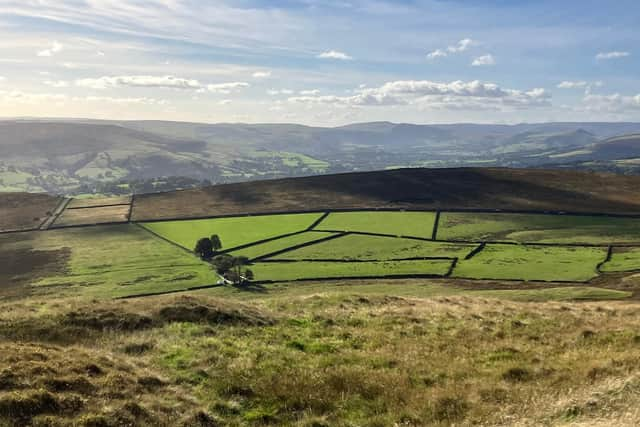
Cllr George argued that carbon dioxide is an asphyxiant – or a gas that can cause death – and the proposed Peak Cluster pipeline aims to run across hills, valleys and land that she claims is unstable with shale and a history of landslides.
She highlighted a CO2 pipeline rupture in Mississippi in 2020 which she says was caused by soil movement after heavy rain which resulted in people collapsing and needing hospital treatment and being left with long-term health problems.

Cllr George argued the proposed pipeline route targets greenfield sites and it will have a significant impact on nature, breaking up wildlife corridors, uprooting trees and hedges along the route and disrupting protected species.
However, Conservative Cllr Linda Grooby, who represents Buxton South and West, argued that cement production contributes nearly a billion pounds to the UK economy and after imports have worryingly tripled in the last decade she argued the scheme would ensure a continued manufacture of local cement and lime while safeguarding 1,400 jobs.
She claims the scheme will reduce CO2 emissions by 95per cent and that the ‘cost to Government would be paid back in spades’, and the project will be governed by high UK safety standards and engineering regulations.
The proposed scheme, which is in its pre-application stage, aims to take CO2 from the connecting cement and lime plants and quarries to Spirit Energy’s proposed Morecambe Net Zero carbon storage site beneath the Irish Sea after passing through Derbyshire, Staffordshire, Cheshire, and Merseyside to help secure the industry and reduce carbon emissions.
Scheme work plants include: Buxton Lime’s Tunstead lime plant, at Tunstead Quarry, off Waterswallows Rd, in Buxton; Breedon’s Hope cement plant, at Pindale Road, in the Hope Valley; Tarmac’s Tunstead cement plant, at Waterswallows Road, Tunstead House, in Buxton; and Holcim’s Cauldon plant between Cauldon and Waterhouses villages in Staffordshire.
Following engineering assessments and a consultation which attracted more than 5,500 responses, Peak Cluster’s updated boundary and changed plans have removed the proposed pipeline route section from Peak Forest to the north of Dove Holes after establishing a more direct route to connect Breedon’s Hope cement plant and Tarmac Tunstead Cement Works to the south.
This has reduced the overall length of the pipeline, according to Peak Cluster, so it avoids existing infrastructure and addresses terrain challenges near Dove Holes and Chapel-en-le-Frith.
Peak Cluster has also removed the proposed North Feeder AGI from plans due to terrain challenges and a review of the system design which has allowed them to move the pipeline connection point back to the planned Tunstead AGI.
This has meant that Peak Cluster has also removed the search area for the proposed AGI between Chapel-en-le-Frith and Dove Holes.
The proposed pipeline route along Eccles Road between Whaley Bridge and Chapel-en-le-Frith to the north east has also been moved to reflect the land’s use.
Other areas undergoing proposed changes outside of Derbyshire include southwest of Gawsworth, near Macclesfield, and Moss Houses and southeast of Holmes Chapel, in Cheshire, south of Abbey Green, near Leek, and north of Hargrave and Cotton Abbotts, also in Cheshire.
Peak Cluster added that amendments have been made to around 15per cent of the proposed pipeline route by revising the area of land included within the project boundary while ensuring the project’s safe construction and operation.
In most locations, the project has reduced the corridor it consulted on from 300 metres to approximately 100 metres, according to Peak Cluster.
The developers added that this reduced change still remains wider than the land expected to be permanently required for the pipeline and provides flexibility for further design refinement as the project progresses.
In November, the project will further consult on changes to proposals in Staffordshire, Derbyshire, and Cheshire, and in January, it will further consult on changes to the proposals associated with The Wirral.
Peak Cluster has stated its project aims to secure the future of Britain’s cement and lime industries while safeguarding and creating jobs and ensuring a reliable, ‘homemade’ supply of essential materials while greatly reducing harmful carbon emissions.
It has argued that cement production is responsible for 7.5per cent of global CO2 emissions but it claims its plans will prevent over three million tonnes of CO2 from entering the atmosphere each year while strengthening the industry’s resilience and opening up new opportunities for growth.
CEO David Parkin, of Peak Cluster Ltd, has said gas and liquids have been transported using pipelines for over 100 years in the UK and the practice is robustly regulated and the UK has a global reputation for safety in this field.
Pipeline design, maintenance and monitoring will follow regulated safety measures, according to Mr Parkin, including pipelines with heavy walls in areas of high population and surveys will be undertaken regularly and leak detection technology is being explored.
Mr Parkin said: “The UK, along with the rest of the world, has to reduce carbon dioxide emissions, and needs to take bold action across every sector of the economy.”
He also argued essential materials from the UK’s supply of British-made cement and lime must be secured to build homes, cleaning water and improve soils.
Once the scheme proposals are finalised, Peak Cluster aims to submit a Development Consent Order application in 2027 for Government approval.
The Labour Government has agreed to award £28.6m towards the estimated £59.6m project with the remaining funding for the scheme to come from private firms, according to the Planning Inspectorate.
The Action Against Carbon Capture Storage (AACCS) campaign group has also raised concerns about disruption and the feared threat to farmland, biodiversity and countryside from the scheme.
Anyone wishing to take part in the AACCS’s ‘solidarity’ relay walk along sections of the previously proposed pipeline route on September 27 can visithttps://highpeak.actionagainstccs.com/2026/08/14/pipewalk/ for details.
Those wishing to find out about Peak Cluster can visit the project website athttps://peakcluster.co.uk/ and the Interactive Map with proposed changes athttps://peakcluster-consultation.co.uk/index.php?contentid=6 for details.