
Derbyshire campaigners join hundreds on march against Peak Cluster carbon capture scheme
Derbyshire campaigners joined a mass march with hundreds of protesters in opposition to the controversial Peak Cluster carbon capture scheme over safety fears and concerns for the environment.
Peak Cluster, which is made up of cement and lime producers in Derbyshire and Staffordshire, aims to oversee the project to capture carbon dioxide from four cement and lime producers across sites in Buxton and the Hope Valley, in Derbyshire, and near Cauldon, in Staffordshire, with an underground pipeline.
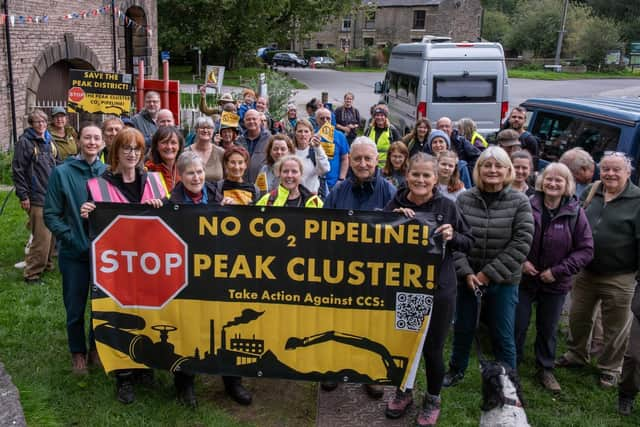

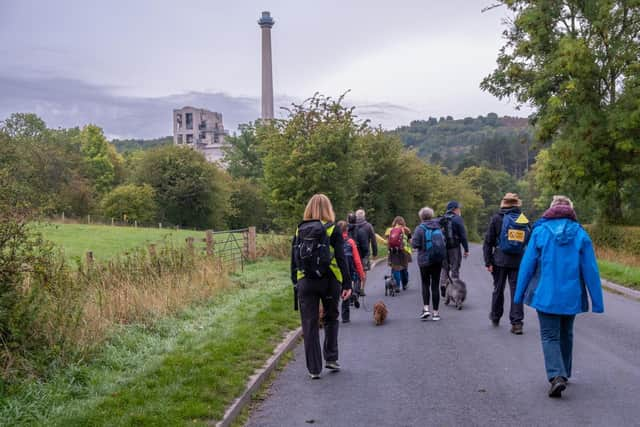
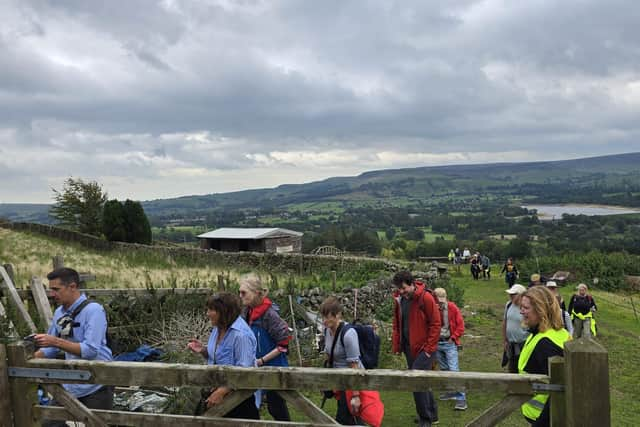
Action Against Carbon Capture Storage (AACCS) organised The Great Pipeline Walk or ‘PipeWalk’ along the estimated 128mile route of the proposed project’s underground pipeline as a relay on September 27 from the High Peak to the Wirral with a choice of adjoining High Peak walks for people to join between three and six miles long.
Campaigner and Derbyshire County Cllr Ruth George, who oversees Whaley Bridge and Chapel-en-le-Frith, said: “People didn’t turn out today (September 27) simply because of house prices or what might happen on their own doorstep.
“They came because they care about something much bigger – our environment, our ecology, our wildlife, and the species that cannot stand up and speak for themselves.
“From one end of the proposed route to the other, people stepped outside their front doors and stood alongside neighbours they’d never met to show that our communities still have a voice. Today, the proposed pipeline route became the PipeWalk.
“Despite corporate assurances, major questions remain unanswered regarding the long-term environmental impacts and financial risks of the Peak Cluster project to the public purse. We are demanding full transparency and rigorous scrutiny before granting any further approvals.”
The scheme, which is in its pre-application stage, aims to take CO2 from the connecting cement and lime plants and quarries to the proposed Morecambe Net Zero carbon storage site beneath the Irish Sea after passing through Derbyshire, Staffordshire, Cheshire, and Merseyside to help secure the industry and reduce carbon emissions.
Scheme work plants include: Buxton Lime’s Tunstead lime plant, at Tunstead Quarry, off Waterswallows Rd, in Buxton; Breedon’s Hope cement plant, at Pindale Road, in the Hope Valley; Tarmac’s Tunstead cement plant, at Waterswallows Road, Tunstead House, in Buxton; and Holcim’s Cauldon plant between Cauldon and Waterhouses villages in Staffordshire.
Peak Cluster stated the project aims to secure the future of Britain’s cement and lime industries while safeguarding and creating jobs and ensuring a reliable, ‘homemade’ supply of essential materials while greatly reducing carbon emissions.
But AACCS has raised concerns about disruption and the feared threat to farmland, biodiversity and countryside bordering on the National Park and damage to the Wirral coastline particularly from the planned large Above Ground Installations needed to transport the CO2 with two proposed for Dove Holes and Chapel-en-le-Frith.
They have are also raised concerns about public and pipeline safety, emergency planning, ecological damage, and taxpayer liability, and the long-term risks of transporting and storing of CO2.
AACCS said that nearly 1,000 residents across five counties including Derbyshire, Cheshire West and East, Staffordshire and the Wirral took to streets, fields and lanes in the mass action to oppose the proposed Peak Cluster scheme.
Protesters covered the course on foot, bike, in a tractor convoy, a motorcade, and even with a rocking horse to highlight their opposition.
Independent Cllr George originally submitted a motion at a Derbyshire County Council meeting in March for the Reform UK-controlled authority to oppose the scheme on safety grounds which it agreed to do while agreeing to support the county’s quarries and cement industry to secure significant Government funding to reduce emissions at source.
Following engineering assessments and a consultation which attracted more than 5,500 responses, Peak Cluster has made some alterations to the pipeline’s route to avoid infrastructure, to address terrain challenges and to reduce the scheme’s corridor in most locations but Cllr George argues this has still failed to address safety concerns.
Peak Cluster stated its project aims to secure the future of Britain’s cement and lime industries while safeguarding and creating jobs and ensuring a reliable, ‘homemade’ supply of essential materials while greatly reducing harmful carbon emissions.
It argued that cement production is responsible for 7.5per cent of global CO2 emissions but it claims its plans will prevent over three million tonnes of CO2 from entering the atmosphere each year while strengthening the industry’s resilience and opening up new opportunities for growth.
CEO David Parkin, of Peak Cluster Ltd, said gas and liquids have been transported using pipelines for over 100 years in the UK and the practice is robustly regulated and the UK has a global reputation for safety in this field.
Mr Parkin argued pipelines will have heavy walls in areas of high population and surveys will be undertaken regularly and leak detection technology is being explored.
Once the scheme proposals are finalised, Peak Cluster aims to submit a Development Consent Order application in 2027 for Government approval.
The Labour Government has agreed to award £28.6m towards the estimated £59.6m project with the remaining funding for the scheme to come from private firms, according to the Planning Inspectorate.
In November, the project will further consult on changes to proposals in Staffordshire, Derbyshire, and Cheshire, and in January, it will further consult on changes to the proposals associated with The Wirral.
AACCS is calling on councils, MPs, and Government regulators to listen to those with concerns and demand clear, verifiable answers to the safety and ecological risks posed by the pipeline.
Those wishing to find out about Peak Cluster can visit the project website athttps://peakcluster.co.uk/ and the Interactive Map with proposed changes athttps://peakcluster-consultation.co.uk/index.php?contentid=6 for details.