
100 people come to archaeological exhibition in Peak District as new Roman findings revealed
The archaeologists who have been working on a site in the Peak District for several years had an open day to share their findings - which include that civilisation on the hills may date back to the Roman era.
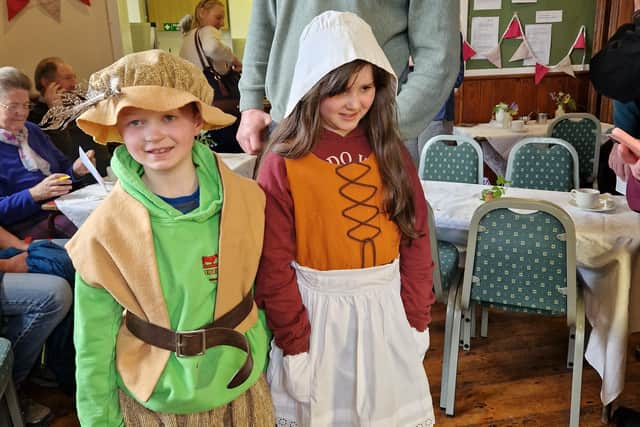
The event 'Shining a light on Sheen's Past' also included a stand on Census records for people to ask about families or who lived in their house, a stand to scan old photos to add to the growing village archive and dressing up for the younger visitors.
The recent work on the site of Under Whitle Farm at the end of last year saw students from Buxton Community School help on site and learn about farming of the past.
Doctor Ian Parker Heath, lead archaeologist on the site, explained about the findings which were on display at the open day.
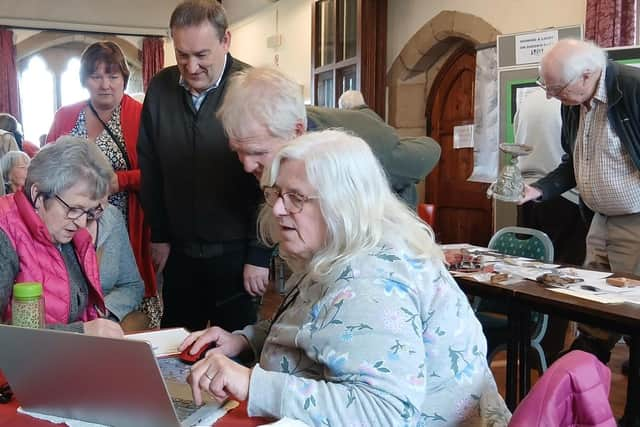

He said: “We have had some really interesting data back and some unexpected surprises too which has been great.
“We knew from past testing that farm crops had been found in the peat bog soil dating back to the mediaeval times and this was again confirmed as we found crop spores from between the 11th and 16th centuries.
“But the new results show that there was evidence of farming from the 4th century which is Roman and not at all what we expected and shows that on these harsh Peak District hills there has been farming and civilisation for more than 1500 years.”
Dr Ian said there will need to be more tests to confirm the Roman data and that it was not just an anomaly.
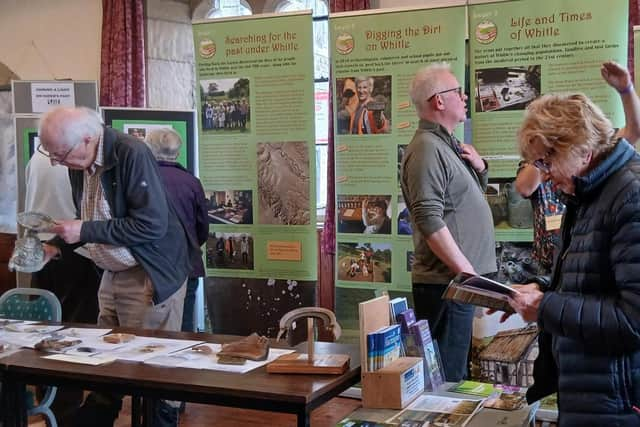
The site is owned by Elspeth Walker who bought Under Whitle farm in 1982 and said her children found what they thought was a cave, but realised by the light of a candle that it was the cellar of an old house.
This sparked the family’s interests in the history of this place along with the lumps and bumps in the fields.
Over the years she has opened up her land and worked with Peak District National Park rangers developing experiential educational activities for the local school children and the team began to discover the history of the site dating back to the Tudor period.
The group of volunteers involved in the activities expanded and in 2009 formally became known as the Tudor Farming Interpretation group.
However, Dr Ian says that while remains of crops have been found no buildings have ever been uncovered.
In early May the Tudor Farming Group will be working with a team from Stoke on Trent who will be scanning the orchard - where the lumpy ground is - to see if any building foundations can be spotted.
If this proves a success the team will apply for more grant funding to excavate that site hoping to fill in the blanks of the past.
He said: “I’m already blown away by what this site has offered in terms of answers. It is a fantastic record of the people who lived and worked there before us.
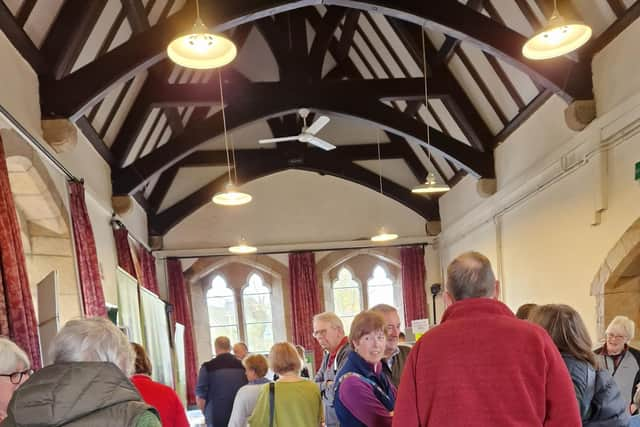
“I’m also so impressed with the turnout we had for the open day - more than 100 people not counting the Tudor Farming Interpretation Group turned up to learn about these findings which is great.”